

SpaceX begins trading today: what do experts make of it?
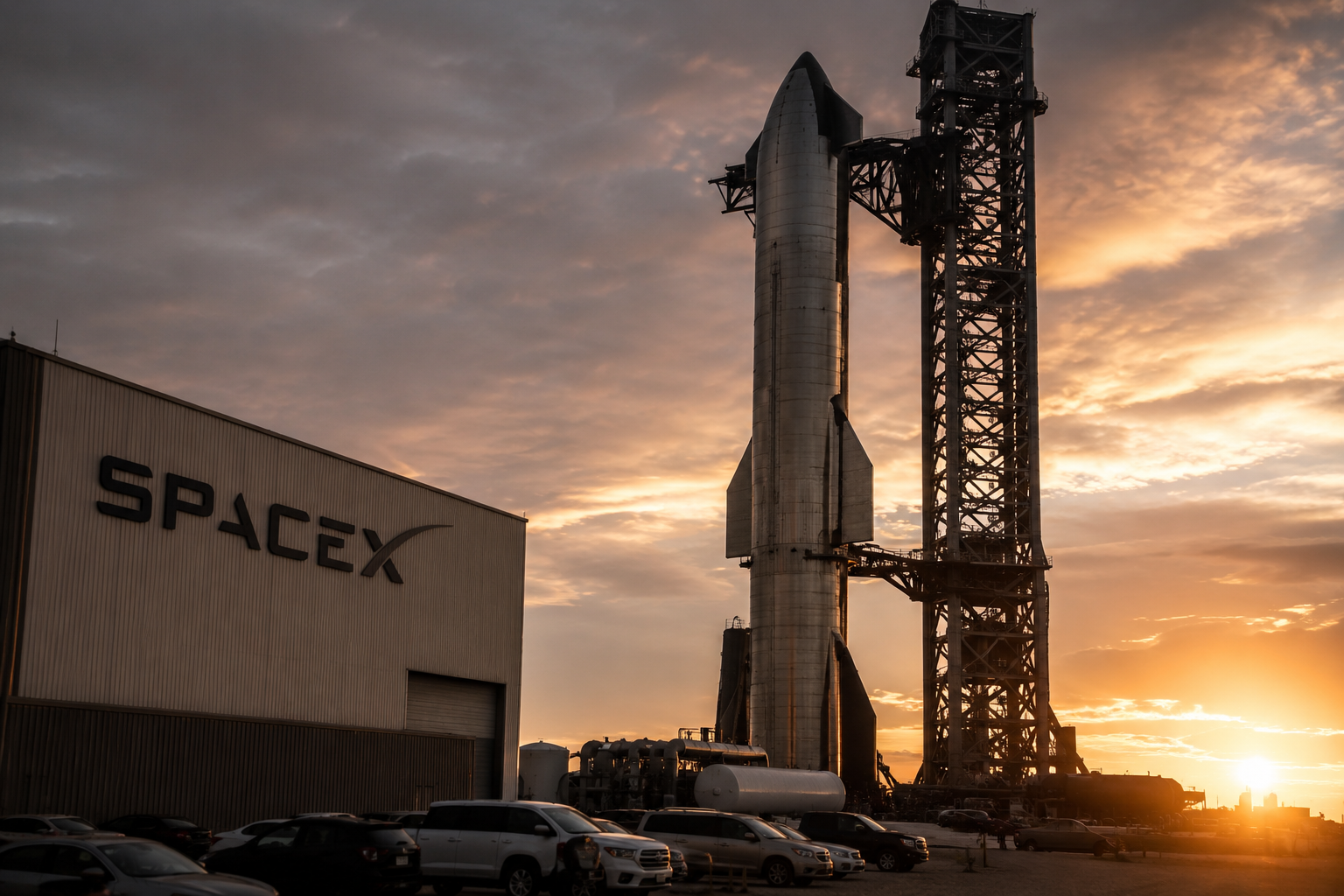
SpaceX shares begin trading today, June 12, a day after the company priced its initial public offering, in what is set to become one of the largest stock market debuts in history.
The Elon Musk-led company is looking to raise $75 billion in the offering, valuing the business at $1.75 trillion — a figure that would place it among the seven most valuable companies in the US, just ahead of Tesla.
The IPO opened roughly 30% of the float to retail investors, while existing shareholders face lock-up restrictions expected to limit selling pressure in the early sessions.
Analysts widely expect the stock to see a sharp initial rally, a pattern common to large, high-profile listings, though sustaining that price has historically proven difficult for similarly hyped debuts.
The listing caps a dramatic transformation for SpaceX, a company that began as a rocket maker known for its early, very public launch failures and has since grown into a business spanning satellite internet, defence contracts, and now an IPO that has captivated markets far beyond the aerospace sector.
Analysts question the price tag
Not everyone is convinced the valuation holds up.
Speaking on the Zero Sum podcast from Invezz, David Morrison, Senior Market Analyst at Trade Nation, argued that investors are paying a steep premium.
"I think it's overvalued... I think you're paying too much on the opening basis," he said.
Morrison referenced Morningstar's assessment, which put SpaceX's fair value at around $780 billion — roughly half the IPO price — with much of the gap attributed to the valuation assigned to xAI, Musk's artificial intelligence venture, which was valued at just $250 billion when it was folded into SpaceX not long ago.
Investors are buying into a Musk-controlled structure
The offering structure has also drawn scrutiny.
Musk will retain 42% of equity alongside Class B super-voting shares, giving him 85% of total voting power — a level of control Morrison said leaves little room for shareholder influence.
"It's an impossibility. It's his company now," he said, though he noted similar structures have been used by Meta, Alphabet, and Snap at the time of their listings.
Starlink anchors the business, and xAI remains a question mark
Much of SpaceX's commercial strength comes from Starlink, its satellite internet division, which served over 9 million users and generated $15-16 billion in revenue last year with $4.4 billion in operating income.
By contrast, xAI generated $818 million in revenue in the first quarter of 2026 but posted losses of nearly $2.5 billion in the same period — losses Morningstar has described as carrying an "indeterminate" economic moat.
Wider implications for markets
The IPO has also raised questions about the blending of commercial markets with national security interests, given SpaceX's extensive government and defense contracts alongside Starlink's growing role in critical infrastructure, including aviation connectivity.
SpaceX's debut comes against a broader market backdrop that Morrison flagged as worth watching, pointing to a strengthening US dollar and what he sees as overvalued US tech stocks heading into the second half of the year.
For a deeper breakdown of the IPO structure, the bull and bear cases, and what it could mean for retail investors, watch the full episode of Zero Sum, available now on YouTube and Spotify.
The post SpaceX begins trading today: what do experts make of it? appeared first on Invezz