
Sterling edges up as Middle East tensions steer market sentiment
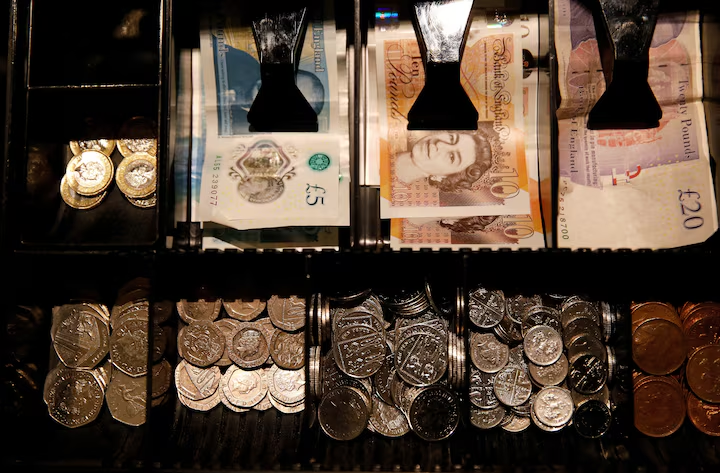
The British pound edged higher against the US dollar on Thursday, retaining most of the gains recorded in the previous session following a ceasefire agreement between the United States and Iran.
However, uncertainty surrounding the durability of the deal limited further upside in sterling.
The pound was last trading 0.1% higher at $1.3407, remaining well above levels below $1.33 seen before the announcement of the ceasefire.
Despite this, the currency has retreated from its Wednesday peak of $1.348, reflecting caution among market participants over the sustainability of the agreement.
Geopolitical tensions weigh on sentiment
Investor sentiment remained fragile as geopolitical developments continued to unfold.
Israel carried out additional strikes in Lebanon on Thursday, while there were no indications that Iran had lifted its blockade of the Strait of Hormuz.
The blockade has resulted in what has been described as the most significant disruption to global energy supplies in history.
Tehran signalled that it would not agree to any deal as long as Israeli strikes on Lebanon continued, underscoring the ongoing instability in the region.
These developments have contributed to heightened market volatility and limited the pound’s ability to extend gains.
Dollar strength reflects relative economic insulation
The US dollar has strengthened throughout the conflict, supported by perceptions that the American economy is less exposed to the geopolitical turmoil compared to other regions.
As a net energy exporter, the United States is seen as better positioned to withstand disruptions in global energy markets than countries such as the United Kingdom.
As a result, sterling, along with other European currencies, has been highly sensitive to geopolitical headlines, rising or falling against the dollar in response to shifting developments.
Sterling’s performance against the euro
The pound also recorded gains against the euro on Wednesday, a move attributed to its sensitivity to equity market performance.
According to Francesco Pesole, currency analyst at ING, sterling benefited from a surge in equities during the previous session.
The euro was last trading at 87.11 pence, slightly higher on the day, after recovering from a Wednesday low of 86.88 pence.
Despite recent gains, analysts remain cautious about the pound’s outlook against the euro.
Francesco Pesole noted that further appreciation may be limited, citing differing monetary policy expectations between the European Central Bank and the Bank of England.
He stated, "After all, the BoE was already ready to cut before the war began," suggesting that expectations for interest rate reductions in the UK could weigh on sterling relative to the euro, where rate hike expectations may prove more persistent.
Overall, while the pound has shown resilience in the wake of geopolitical developments, ongoing uncertainty and diverging economic fundamentals continue to cap its upward momentum.
The post Sterling edges up as Middle East tensions steer market sentiment appeared first on Invezz